
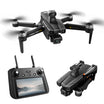
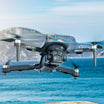
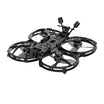
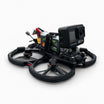
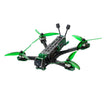
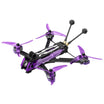
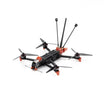
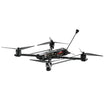
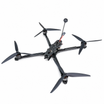
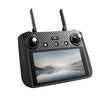



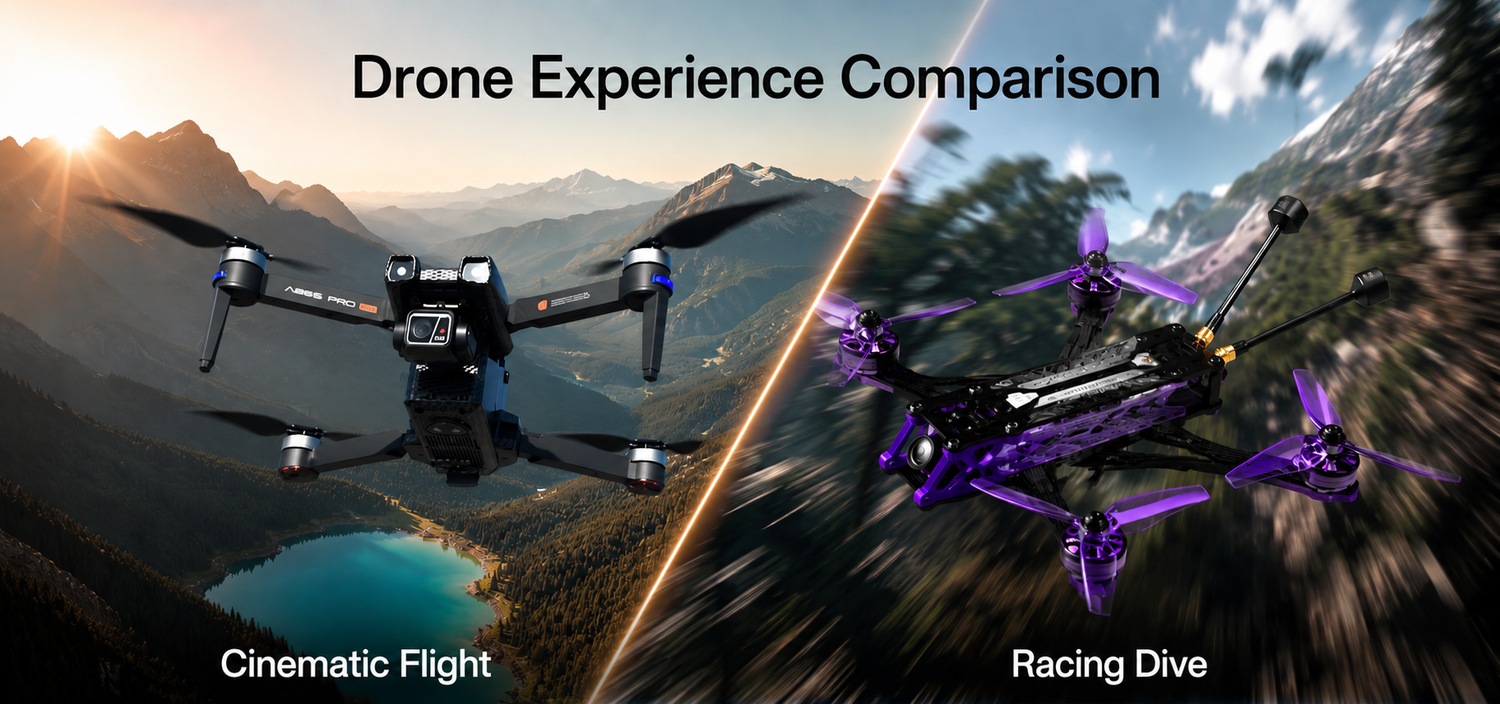
Consumer Drones vs. FPV Drones, just like the automatic and manual gear of the car
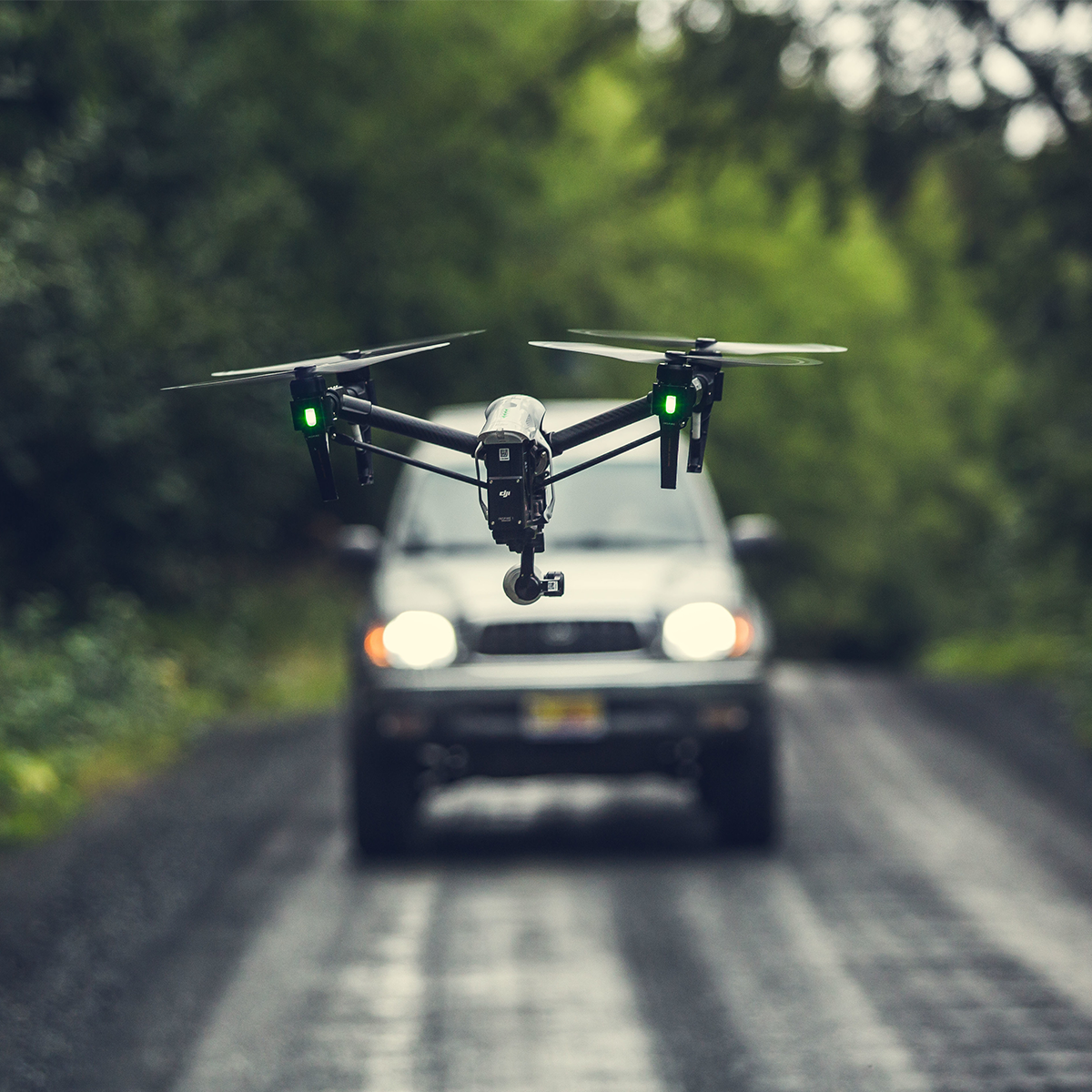
Think of a consumer drone like an automatic car. It's smooth, stable, and predictable. You press a button, and it hovers. You tap a screen, and it flies in a preset route. Everything is automated. It's safe, but it's also… boring. You're more of a passenger than a pilot.
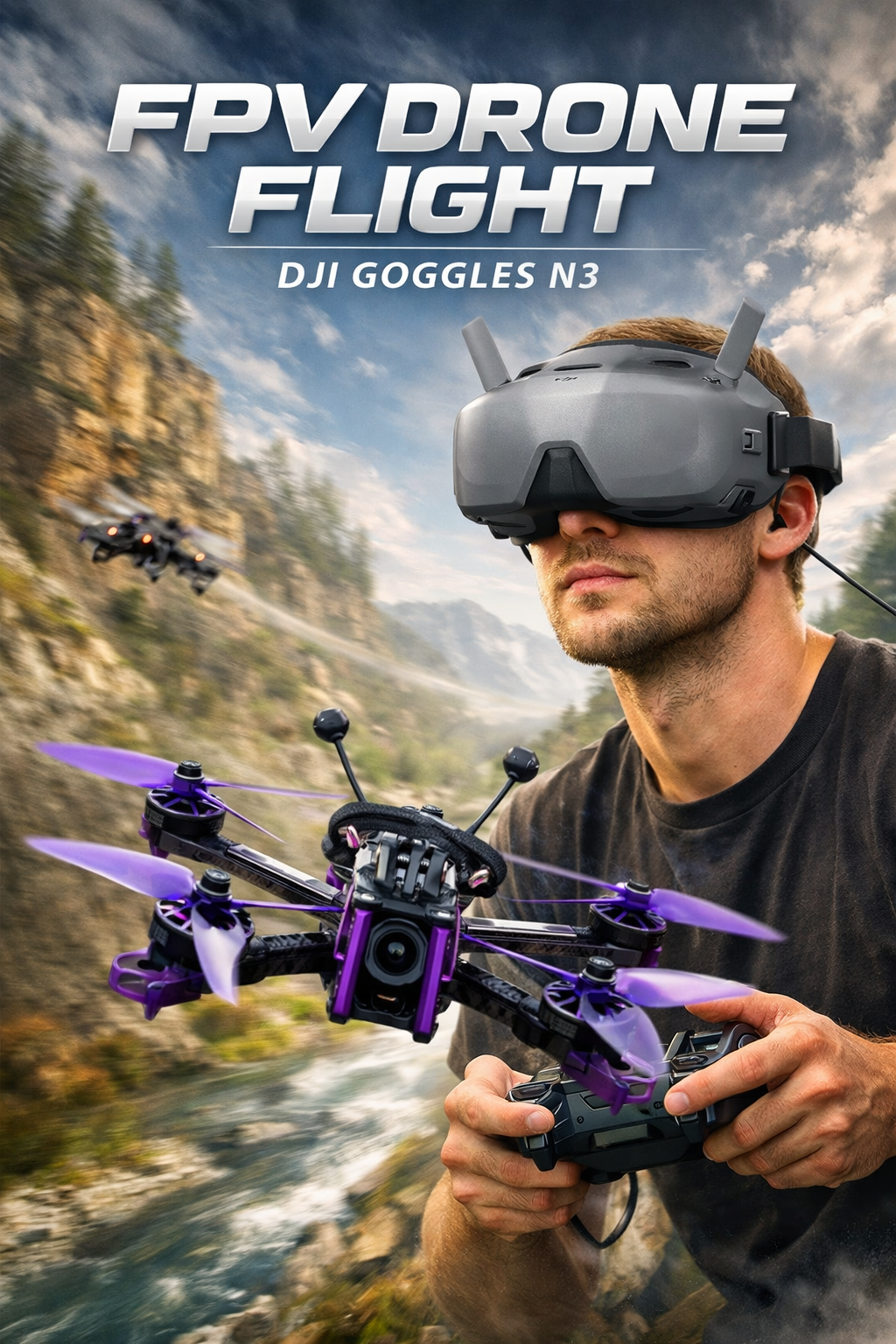
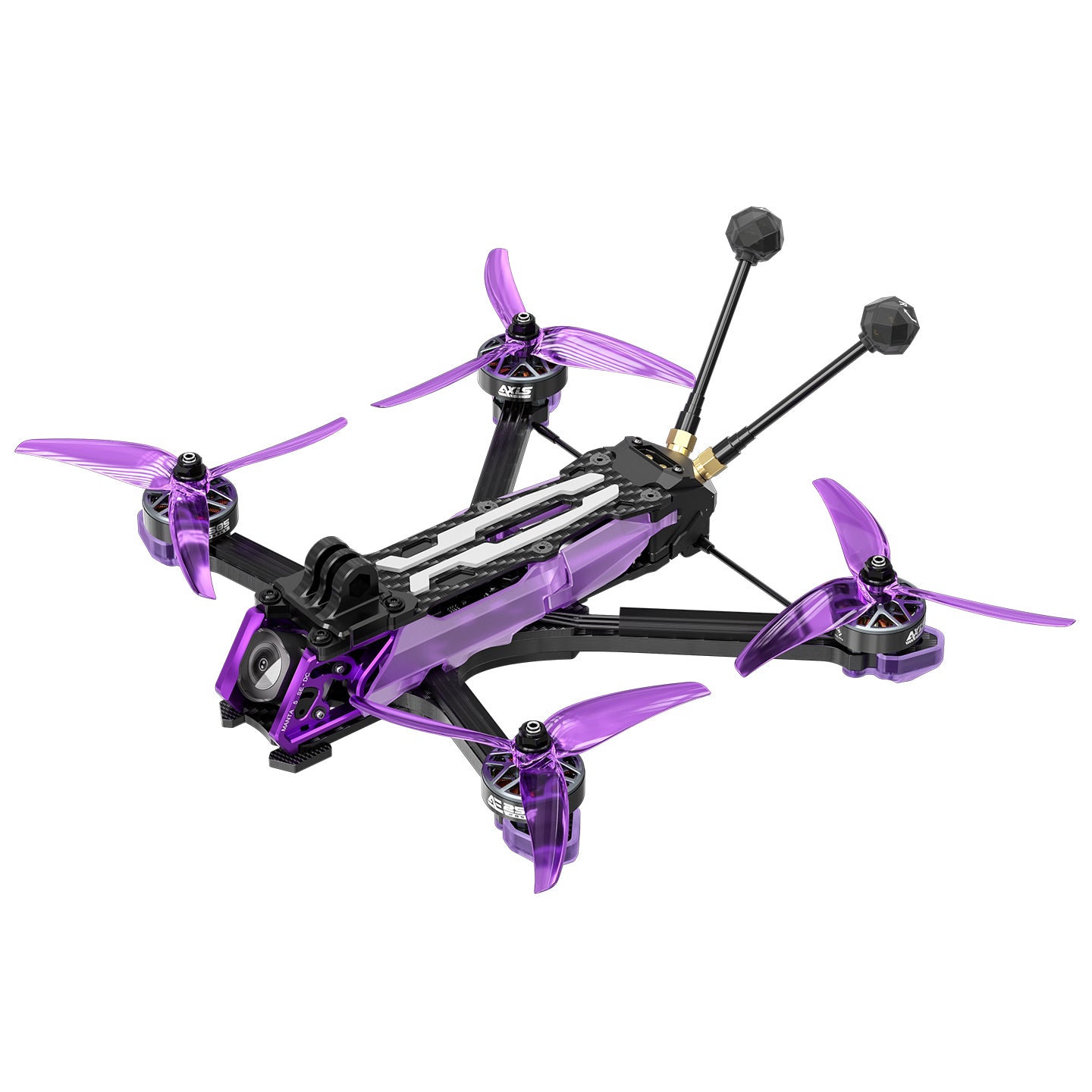
Now imagine an FPV drone. That's a manual transmission. You control the pitch, the roll, the throttle, the yaw — all with your thumbs, in real time. Just you, the goggles, and a machine combine together.
FPV drones have infinite possibilities. You can fly slow and cinematic, or dive buildings at 80 miles per hour. You can roll, loop, power loop, fly through a car window, or slide under a bridge. It's not just a camera tool — it's a toy, a challenge, and an extension of your own reflexes. You are a bird flying in the sky.
But when you start to fly an FPV drone, here are some tips and warnings for New FPV Drone Pilots:
1. Start with a simulator; don't jump straight to a real drone.
Spend 20–30 hours in something like FeelFPV, Liftoff, VelociDrone, or Uncrashed.

2. Stock up on spare parts.
As a beginner, get at least 3–5 sets of props, a few antennas, spare motors, a spare flight controller, a spare camera, and a spare VTX. Having a backup drone helps too. You'll break stuff often, and waiting for parts will stop your progress.
3. Make a pre-flight checklist and stick to it.
Before you take off, check: Are the props cracked? Motors spinning freely? FPV Battery and the remote controller battery full? VTX channel clear? Camera lens clean? Also check battery voltage with a multimeter — never let a cell drop below 3.6 volts.
4. Safety first. Pick the right place to fly.
Stay away from crowds, roads, buildings, airports, restricted zones, and high-voltage lines. As a beginner, pick an open grassy field, an abandoned factory, or a legal FPV track. Don't fly in parks when there are lots of people. Ideally, have a spotter with you — one person flies, the other watches out.
5. Learn your emergency safety features.
Set up your failsafe (like auto-return or auto-land when the signal is lost). Set up an emergency switch so you can instantly stop the props. Learn GPS rescue mode, but don't rely on it too much — it can fail in cities.
6. Take it slow. Don't rush into hard moves.
Start with slow, low-altitude flying in big open spaces. Then slowly work your way to tight gates, low passes, backward flying, and tight turns. Don't try to copy the crazy videos you see online — those guys crashed hundreds of times before pulling those moves.
7. Review every flight, even the easy ones.
Watch your footage back. Check if the drone is shaking or drifting. Every time you crash, write down why — bad control, signal loss, low battery, or pilot error — and then fix it.
8. Respect other people, and respect your drone.
If someone says they're uncomfortable, land immediately and explain what you're doing ("I'm just shooting aerial footage, not filming people"). Never fly over someone's yard or window, even for practice. It can get you reported or even fined.
9. When you crash, do three things:
Check the drone for damage. Check the battery for puffing or damage. And check your own mindset. If you're angry or frustrated, stop flying for the day. Take a break, figure out what went wrong, then try again tomorrow.
10. And the most important rule of all — safety comes first.
Don't fly near people just to get a cool shot. Don't fly over running tracks, soccer fields, or stadiums. Don't fly in storms or high winds. And if you ever think "this might be risky" — it probably is. Stop, and don't fly.